

Drain cleaning in Pennsylvania follows a clear process that begins with identifying where the blockage is, then using the right method to clear it completely. Whether you own a century-old row home in Philadelphia or a newer property in Lancaster County, understanding exactly what happens during a professional drain cleaning service helps you make smarter decisions, avoid unnecessary costs, and recognize when a small problem is about to become a very expensive one. Homeowners looking for a reliable and experienced team often start with a trusted professional drain cleaning company in Pennsylvania.
Why Pennsylvania Homes Face Unique Drain Challenges
Drain cleaning in Pennsylvania follows a clear process that begins with identifying where the blockage is, then using the right method to clear it completely. Whether you own a century-old row home in Philadelphia or a newer property in Lancaster County, understanding exactly what happens during a professional drain cleaning service helps you make smarter decisions, avoid unnecessary costs, and recognize when a small problem is about to become a very expensive one. Homeowners searching for reliable drain cleaning in Pennsylvania often start with a trusted professional drain cleaning company in Pennsylvania for long-term sewer and drain solutions.
This guide walks Pennsylvania homeowners through every stage of the drain cleaning in Pennsylvania process, from the first warning signs to what a licensed technician actually does when they arrive at your door.
Before getting into the process itself, it helps to understand why drain cleaning in Pennsylvania is not exactly the same as it is in other parts of the country.
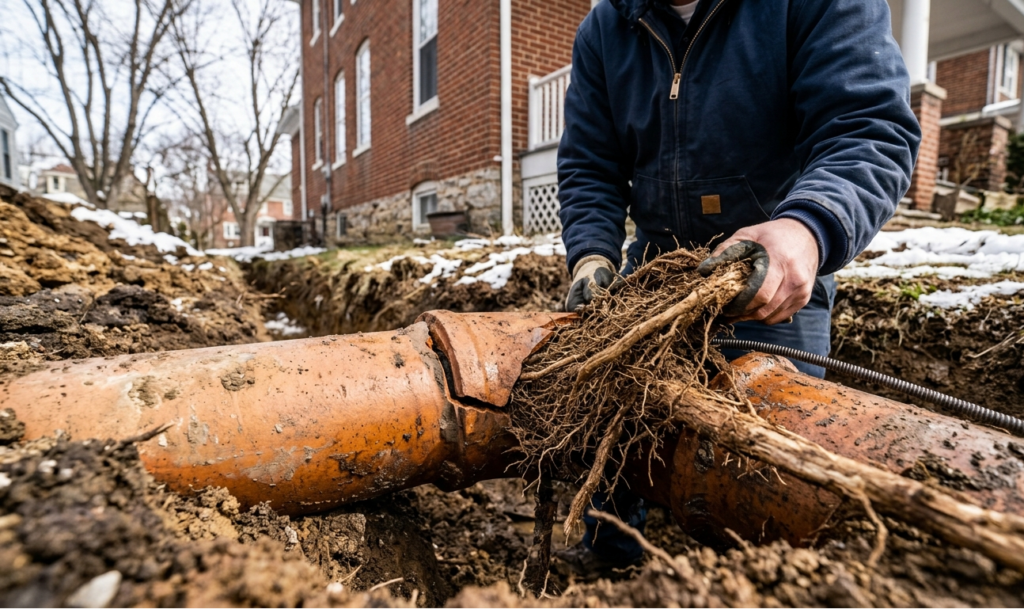
Pennsylvania has some of the oldest residential plumbing infrastructure in the entire United States. Many homes across Lancaster, York, Harrisburg, and Philadelphia still have original clay tile or cast iron pipes that were installed decades ago. These materials are prone to joint separation, corrosion, and root intrusion in ways that modern PVC pipes simply are not. That is why many homeowners schedule regular professional drain cleaning services before small issues turn into major sewer line problems.
The state also experiences significant freeze and thaw cycles throughout the winter months. When the ground freezes and thaws repeatedly, it shifts. That movement stresses underground drain and sewer lines, widens existing cracks, and creates new entry points for tree roots. Once roots find their way into a sewer line, they grow fast and cause serious blockages within a short period of time, making drain cleaning in Pennsylvania even more important for older properties.
On top of that, Pennsylvania has some of the most mature tree canopy coverage in the Mid-Atlantic region. Oaks, maples, and sycamores with deep root systems are common across York County, Lebanon County, and Dauphin County neighborhoods. Those roots are constantly seeking moisture, and your sewer line is full of it.
All of this means that drain cleaning in Pennsylvania requires more than a basic approach. It requires local knowledge, the right equipment, and a process built around Pennsylvania’s specific plumbing realities.
The First Signs That Your Drains Need Attention
Professional drain cleaning starts before the technician even arrives. It starts with you noticing that something is not quite right. Here are the warning signs Pennsylvania homeowners should never ignore.
Slow drainage in one or more fixtures. If your bathroom sink takes two minutes to drain after washing your hands, that is not normal. A slow drain almost always means partial blockage somewhere in the line.
Gurgling sounds coming from the drain. That bubbling or gurgling noise after you flush the toilet or run the dishwasher is trapped air being pushed back up through the pipes. It signals a restriction in the drain line.
Water backing up into other fixtures. When you run the washing machine and water rises in the basement floor drain, or when flushing the toilet causes water to bubble up in the tub, the main sewer line is likely partially or fully blocked.
Sewage odors inside the home. Sewer gas has a very distinctive smell and should never be present inside a living space. If you can smell it near floor drains, under sinks, or in the basement, something in the drainage system is not sealed or flowing the way it should be.
Recurring clogs in the same location. A clog that comes back two or three weeks after you clear it is not just a surface problem. It points to buildup deeper in the pipe that needs professional attention.
Step 1: Initial Assessment and Problem Identification
When a licensed drain cleaning technician arrives at your Pennsylvania home, the first thing they do is assess the situation before touching any equipment. This step is more important than most homeowners realize, especially for homeowners dealing with recurring issues requiring drain cleaning in Akron and surrounding Pennsylvania communities.
The technician will ask questions about what you have noticed, which fixtures are affected, how long the problem has been happening, and whether it is getting worse over time. This information tells an experienced professional a great deal about where in the system the problem likely lives and what type of drain cleaning in Pennsylvania solution is needed.
They will also conduct a visual inspection of accessible cleanout points, usually found in the basement, near the foundation wall, or in the yard close to where the sewer line exits the home. A cleanout is a capped pipe fitting that gives direct access to the main sewer line without having to open walls or dig.
For most residential drain problems in Pennsylvania, the technician will have a good working theory about the cause before they ever deploy any equipment. That matters because choosing the wrong method for the wrong type of clog can push debris deeper into the system or even damage aging pipe materials during the drain cleaning in Pennsylvania process.
Step 2: Drain Camera Inspection for Accurate Diagnosis
For anything beyond a straightforward surface clog, a professional sewer camera inspection is the most reliable diagnostic tool available. This is where the process becomes very different from anything a homeowner can do on their own.
A waterproof, high-definition camera mounted on a flexible cable is fed directly into the drain line through the cleanout or a fixture drain. As the cable travels through the pipe, the technician watches a live feed on a monitor and can see exactly what is inside the line. They can identify the precise location of a blockage, measure how far it is from the access point, and assess the condition of the pipe walls themselves.
This technology reveals things that are impossible to detect from the outside. It shows whether the blockage is made of grease buildup, compacted hair and soap scum, root intrusion, a collapsed pipe section, or foreign debris. Each of these causes requires a different cleaning method. Without the camera, the technician is guessing. With it, they know exactly what they are dealing with.
For Pennsylvania homeowners with older clay tile or cast iron pipes, the camera inspection also reveals whether the pipe itself is still structurally sound. A pipe that is cracked, separated at the joints, or has areas of severe corrosion needs more than cleaning. It needs repair or replacement, and the camera makes that determination without any digging.
Step 3: Choosing the Right Drain Cleaning Method
Once the technician knows what type of blockage they are dealing with and where it is located, they select the appropriate cleaning method. There is no single tool that works for every situation, and any company that uses only one approach regardless of the problem is not doing the job correctly.
Here are the primary methods used by professional drain cleaning services in Pennsylvania.
Drain Snaking (Mechanical Augering)
A drain snake, also called a drain auger, is a flexible coiled cable that is fed into the pipe and rotated to break apart or retrieve a blockage. It is the most appropriate method for localized clogs caused by hair, soap scum, and small debris accumulations.
Motorized drain snakes are significantly more powerful than the manual versions sold at hardware stores. A professional-grade electric auger generates consistent rotational force that can break through compacted buildup that a hand snake simply cannot budge. Different cutting heads can be attached depending on the type of clog. A standard auger head works well for debris retrieval, while a root cutting head is designed specifically for severing tree root intrusions inside the pipe.
Drain snaking is fast, cost-effective, and safe for most pipe materials including the older clay and cast iron pipes found throughout central and southeastern Pennsylvania.
Hydro Jetting
Hydro jetting uses water pressurized to between 1,500 and 4,000 pounds per square inch, delivered through a specialized nozzle that is inserted into the drain line. The high-pressure water stream blasts through blockages, strips grease and mineral scale from the interior pipe walls, and flushes all debris downstream and out of the system.
This is the most thorough drain cleaning method available. Where a drain snake breaks through a clog and creates a path for water to flow, hydro jetting removes all the material from the pipe walls entirely. The result is a drain that flows at full capacity rather than just improved capacity.
Hydro jetting is particularly effective in Pennsylvania homes where grease buildup is a concern in kitchen drain lines, or where years of mineral scale from hard water have narrowed the interior diameter of the pipes. It is also the standard approach for commercial drain cleaning at restaurants and food service facilities throughout Lancaster, York, and Harrisburg.
One important consideration: hydro jetting should be performed only on pipes that are in structurally sound condition. Before using high-pressure water on older pipes, a camera inspection confirms the pipe can withstand the pressure. This is another reason why the diagnostic step matters so much.
Pipe Descaling
Pipe descaling is a specialized process for cast iron drain lines that have developed heavy mineral deposits on their interior walls. Over time, calcium, magnesium, and iron compounds from Pennsylvania’s moderately hard water bond to cast iron pipe interiors and form a thick, rocky scale that significantly reduces flow capacity.
Standard snaking does not remove this scale. Hydro jetting alone is sometimes not enough for the hardest deposits. Pipe descaling uses a rotating chain or carbide-tipped tool driven by a high-torque machine to chip and break the scale away from the pipe walls, followed by a thorough flush. It restores the original interior diameter of the pipe without requiring replacement.
This method is especially relevant for Pennsylvania homes built before 1970 that have cast iron drain stacks and branch lines.
Step 4: The Actual Cleaning Process
Once the method is selected and the equipment is set up, the cleaning itself begins. Here is what happens during each type of service.
During drain snaking, the cable is fed into the cleanout or the drain opening until it meets resistance. The technician rotates the cable to engage the clog. Depending on the blockage type, the snake either breaks the material apart so it can be flushed through, or it catches on the debris and allows the technician to pull the whole mass back out of the pipe. After the blockage is cleared, water is run through the line to confirm restored flow.
During hydro jetting, the nozzle is inserted into the line through the cleanout and the machine is pressurized. The nozzle is designed with forward and rear-facing jets. The forward jets cut through blockages while the rear-facing jets propel the nozzle forward and simultaneously scour the pipe walls behind it. The technician works the nozzle through the entire affected section of the line, then pulls it back slowly to ensure complete coverage. All debris is flushed toward the main municipal sewer or the septic system.
Throughout the cleaning process, experienced technicians in Pennsylvania pay close attention to how the pipe responds to the equipment. Changes in resistance, unusual sounds, or debris characteristics all provide additional information about the condition of the system.
Step 5: Post-Cleaning Verification
After clearing the blockage, the job is not finished. A thorough post-cleaning verification is what separates professional drain cleaning from a quick fix that will need to be repeated in a few weeks.
The technician runs water through the system at volume to confirm that drainage has been fully restored. In many cases, a second pass with the camera is performed after cleaning to verify that the pipe is clear all the way through and that no secondary blockages or structural issues were missed during the initial inspection.
If the camera inspection after cleaning reveals cracking, joint separation, or sections of pipe that are at high risk of failure, the technician documents those findings and discusses repair options with the homeowner before leaving. In Pennsylvania, where aging infrastructure is so common, finding these issues during a routine cleaning appointment is actually one of the most valuable parts of the service.
The work area is cleaned up, the cleanout cap is replaced, and the technician provides a summary of what was found, what was done, and any recommendations for follow-up maintenance.
How Long Does Professional Drain Cleaning Take?
For most single-fixture drain clogs in a Pennsylvania home, the entire process from arrival to completion takes between 45 minutes and one and a half hours. Main sewer line cleaning with a camera inspection and hydro jetting typically runs between one and a half and three hours depending on the condition of the line and the severity of the buildup.
Commercial drain cleaning jobs at restaurants or larger properties in cities like Lancaster or Harrisburg may take longer, particularly if multiple fixtures or grease traps are being serviced at the same time.
How Often Should Pennsylvania Homeowners Schedule Drain Cleaning?
For most Pennsylvania households, professional drain cleaning every 18 to 24 months is a reasonable baseline. However, several factors in this state push that recommendation toward more frequent service.
Homes with large trees growing near the sewer line should schedule annual inspections at minimum, given how quickly root intrusion can develop. Properties with cast iron pipes that are 40 or more years old benefit from annual cleaning and inspection to monitor internal condition. Households with four or more people generate significantly more grease, hair, and debris volume, and typically need cleaning on a 12 to 18-month schedule. Anyone who has experienced a sewer backup in the past is at elevated risk for recurrence and should not wait more than 12 months between professional services.
Kitchen drain lines in households that cook frequently are particularly prone to grease accumulation, especially during the colder months when grease congeals faster inside the pipes.
What Homeowners Can Do Between Professional Cleanings
While professional drain cleaning is the only method that fully addresses buildup deep in the pipe system, there are practical habits Pennsylvania homeowners can adopt to extend the time between service calls.
Use a mesh drain strainer in every shower, tub, and kitchen sink. This single step prevents the majority of hair and food debris from entering the drain at all. Empty and clean the strainer regularly so it does not become a source of odor or overflow.
Never pour cooking grease down the kitchen drain. Even small amounts poured regularly accumulate quickly inside the pipe walls. Let grease cool in a container and dispose of it in the trash instead.
Flush drains monthly with very hot water to dissolve minor soap and grease accumulation before it hardens. For bathroom drains, a solution of baking soda followed by hot water is a safe and effective monthly maintenance step that does not harm pipe materials.
Avoid using chemical drain cleaners on a regular basis. These products use caustic reactions to dissolve soft clogs, but those same reactions degrade the interior of older pipes over time. For Pennsylvania homes with cast iron or clay tile plumbing, repeated chemical treatments accelerate corrosion and joint deterioration.
Know where your main sewer cleanout is located. Every Pennsylvania homeowner should identify this access point so that in the event of an emergency, time is not wasted searching for it when the technician arrives.
The Bottom Line for Pennsylvania Homeowners
Drain cleaning in Pennsylvania is a process built on accurate diagnosis, the right equipment, and a clear understanding of what makes this state’s plumbing systems unique. Older pipe materials, aggressive root systems, and seasonal ground movement all play a role in how and why drains fail here, and addressing those factors properly requires more than a quick snake and flush. Many older homes with aging cast iron pipes especially benefit from professional inspection and maintenance.
When you understand each step of the drain cleaning in Pennsylvania process, from the initial assessment and camera inspection through the actual cleaning and post-service verification, you can have an informed conversation with the technician, ask the right questions, and make decisions that protect your home long term.
If your drains are showing any of the warning signs described in this guide, or if it has been more than two years since your last professional serviceand make decisions that protect your home long term through proper sewer line maintenance the right time to schedule drain cleaning in Pennsylvania is now, before a manageable problem turns into a serious one.
FAQs About Drain Cleaning in Pennsylvania
How often should homeowners schedule drain cleaning in Pennsylvania?
Most homeowners should schedule professional drain cleaning in Pennsylvania every 18 to 24 months. Older homes with cast iron pipes, large trees near sewer lines, or recurring clogs may require annual service.
What are the signs that I need drain cleaning in Pennsylvania?
Common signs include slow drains, gurgling noises, sewage odors, recurring clogs, and water backing up into tubs, sinks, or basement drains.
Is hydro jetting safe for older Pennsylvania pipes?
Yes, but only after a camera inspection confirms the pipes are structurally sound. Professional drain cleaning in Pennsylvania often includes inspections before hydro jetting is recommended.
Can tree roots damage sewer lines in Pennsylvania?
Yes. Tree roots are one of the leading causes of sewer line blockages in Pennsylvania because roots naturally seek moisture and enter small cracks in underground pipes.
What is included in professional drain cleaning in Pennsylvania?
Professional drain cleaning in Pennsylvania typically includes a system inspection, drain camera diagnostics, blockage removal using snaking or hydro jetting, flow testing, and post-cleaning verification.