The main sewer line is the single most important component of your home’s drain system. When it is clear and functioning properly, every fixture in the house works the way it should. When it is blocked or failing, nothing works correctly and the potential for serious property damage from a sewage backup is real and present.
Understanding drain snaking vs hydro jetting Pennsylvania is essential for homeowners dealing with slow drains, backups, or recurring plumbing issues. If you are experiencing system-wide drainage problems, you can explore more about our home drain cleaning services which handle both mechanical and high-pressure solutions depending on pipe condition.
What Is Drain Snaking and How Does It Work?
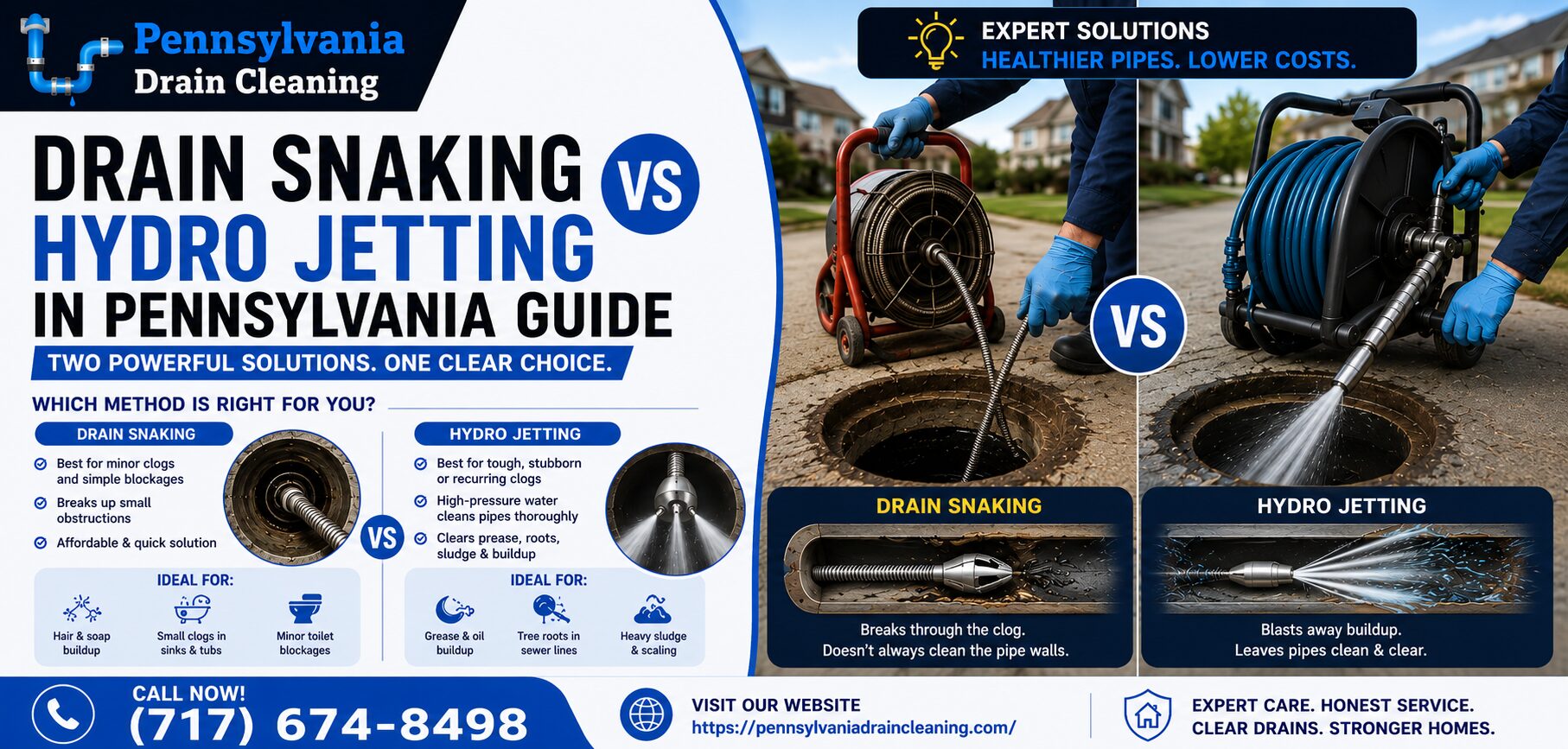
Drain snaking, also called mechanical augering, is one of the oldest and most reliable tools in a plumber’s arsenal. The process involves feeding a long, flexible metal cable into the drain opening until it reaches the obstruction. The cable has an interchangeable cutting or corkscrew tip on the end that either breaks the clog apart into smaller pieces that wash away or hooks onto the debris so it can be pulled back out of the pipe entirely.
In most cases of drain snaking vs hydro jetting Pennsylvania, snaking is used as the first-response method because it is fast, affordable, and effective for localized blockages.
Professional grade motorized snakes used by licensed drain technicians are significantly more powerful than the small hand-crank versions available at hardware stores. They can reach deep into main or branch lines depending on the blockage location.
When Drain Snaking Is the Right Call
Drain snaking works best for blockages that are localized to one area rather than spread throughout the system. Here are the situations where snaking is the appropriate and most cost-effective choice:
A single fixture is draining slowly or has stopped draining entirely, while every other drain in the home is working normally. This pattern almost always points to a blockage in the branch line serving that specific fixture rather than a problem with the main sewer line.
The clog is made up of soft material like hair, soap scum, small food particles, or foreign debris. These materials respond well to mechanical disruption. A rotating cutting head breaks them apart and restores flow quickly.
The pipe system is older and has not yet been inspected by a camera. In homes across Lancaster County, York County, and Lebanon County where original clay tile or heavily corroded cast iron pipes are still in service, snaking is the safer starting point.
The Real Limitation of Drain Snaking
Drain snaking opens a clog, but it does not clean the pipe walls. This is one of the most important limitations in the entire drain snaking vs hydro jetting Pennsylvania comparison.
Even after a snake clears a path, grease, scale, and residue remain inside the pipe. Over time, this leftover buildup attracts new debris, causing the same clog to return.
Homeowners dealing with recurring backups often schedule drain cleaning services in York, PA before a small blockage turns into a major sewer line problem
What Is Hydro Jetting and How Does It Work?
Hydro jetting is a high-pressure drain cleaning method that uses water between 1,500 and 4,000 PSI to fully clean pipe interiors.
Unlike snaking, hydro jetting removes all buildup from pipe walls, restoring near-original flow capacity. It is often used when performing professional hydro jetting service for severe or recurring blockages.
The process includes forward jets to break clogs and rear jets to scrub pipe walls completely, making it significantly more thorough in the drain snaking vs hydro jetting Pennsylvania comparison.
When Hydro Jetting Is the Right Choice
Hydro jetting is recommended when:
- The same drain clogs repeatedly
- Multiple fixtures are slow or backing up
- Grease buildup is confirmed in kitchen lines
- Tree roots are present in sewer lines
- Commercial or high-usage systems are involved
It is especially effective in homes with recurring main line issues.
Drain Snaking vs Hydro Jetting: Direct Comparison
The key difference in drain snaking vs hydro jetting Pennsylvania comes down to cleaning depth:
Snaking = breaks a hole through the clog
Hydro jetting = fully cleans pipe walls
Snaking provides temporary relief, while hydro jetting provides long-term restoration.
Why Pennsylvania Homes Require Special Care
Homes in Pennsylvania face unique plumbing challenges such as aging clay pipes, root intrusion, and seasonal ground movement.
This makes proper diagnosis critical before choosing between drain snaking vs hydro jetting Pennsylvania solutions.
Many homeowners also benefit from routine main line drain cleaning guide education to understand long-term system health.
Understanding Pipe Responsibility
In most cases, homeowners are responsible for the sewer lateral from the house to the municipal connection point.
This is why inspection matters before choosing any method in drain snaking vs hydro jetting Pennsylvania situations.
A proper sewer camera inspection service helps determine whether snaking or jetting is safe for your system.
When to Call a Professional
If you notice:
- Multiple slow drains
- Gurgling noises
- Sewage smells
- Repeated backups
Then you should avoid guessing between methods and get a full inspection first.
Final Takeaway
The decision in drain snaking vs hydro jetting Pennsylvania is not about which is better overall, but which is appropriate for your pipe condition.
Snaking is best for quick, isolated clogs. Hydro jetting is best for deep, recurring buildup.
A professional inspection ensures you choose the right method the first time — preventing repeat issues and long-term damage.
Pennsylvania homeowners can learn more about how wastewater systems function from the Environmental Protection Agency’s guide to sanitary sewer systems.
FAQs
1. How do I know if I need hydro jetting or just drain snaking?
If only one drain is clogged or slow, drain snaking is usually the right starting point. If multiple drains are backing up or the same clog keeps returning, hydro jetting is often the better long-term solution.
2. Is hydro jetting safe for older Pennsylvania pipes?
Hydro jetting is safe when the pipe is structurally sound. Most professional companies inspect the line with a sewer camera first to check for cracks, weak joints, or collapsed sections before using high-pressure cleaning equipment.
3. How often should homeowners schedule hydro jetting in Pennsylvania?
Most Pennsylvania homes benefit from professional drain cleaning every 18 to 24 months. Homes with mature trees, grease buildup, or aging cast iron pipes may need annual maintenance.
4. Can hydro jetting remove tree roots from sewer lines?
Yes. Hydro jetting with specialized root-cutting nozzles can clear light to moderate root intrusion from sewer lines. However, recurring root problems may eventually require sewer line repair or pipe lining.
5. What are the warning signs of a main sewer line clog?
Common warning signs include gurgling toilets, multiple slow drains, sewage odors, water backing up into tubs or basement drains, and recurring clogs throughout the home.