
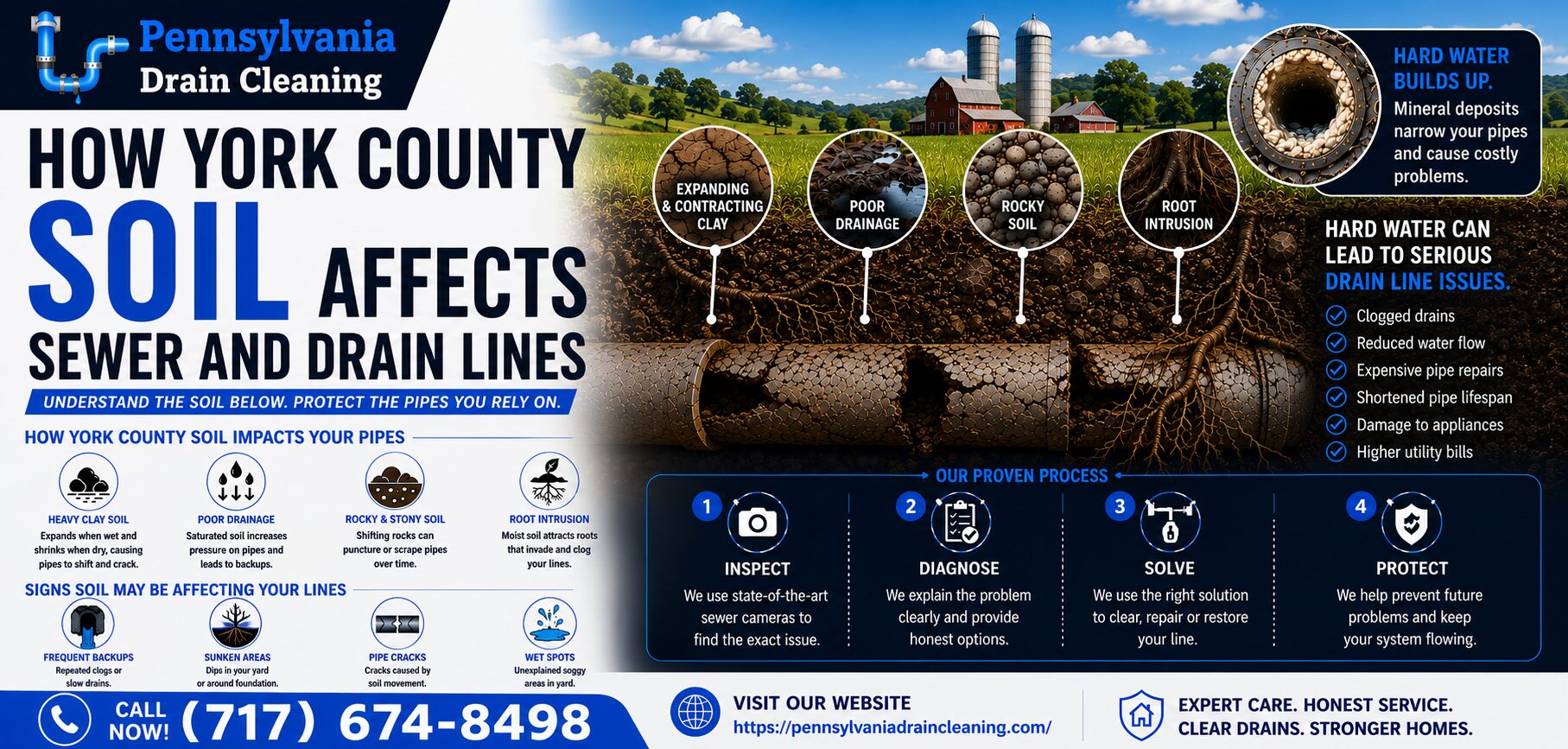
Many homeowners focus on what goes down their drains, but the ground surrounding underground pipes is just as important. The soil conditions in York County can significantly affect the performance and lifespan of sewer and drain lines. Different soil types expand, contract, retain moisture, and shift over time, placing stress on underground plumbing systems.
At Pennsylvania Drain Cleaning, we regularly inspect and repair sewer and drain lines that have been damaged by soil movement, root intrusion, and ground settlement. Understanding how local soil conditions affect underground pipes can help homeowners identify problems early and avoid costly repairs.
Understanding York County’s Soil Composition
York County contains a variety of soil types, including clay-rich soils, silt soils, and areas with rocky terrain. Each type interacts differently with underground plumbing infrastructure.
Clay-heavy soils are particularly challenging because they absorb large amounts of water during wet periods and shrink during dry conditions. This continuous cycle creates pressure on buried sewer and drain lines, causing joints to separate, pipes to crack, and connections to weaken over time.
Rocky soils present different challenges. While they provide stability in some situations, large rocks can place uneven pressure on underground pipes, especially when soil settles around them.
How Expanding and Contracting Soil Damages Pipes
One of the most common causes of underground pipe damage in York County is soil expansion and contraction.
During periods of heavy rainfall, clay soils absorb moisture and swell. This expansion pushes against nearby sewer and drain lines, creating external pressure. When dry weather returns, the soil contracts and leaves voids around the pipes.
Over repeated seasonal cycles, this movement can:
- Crack pipe walls
- Separate pipe joints
- Create pipe misalignment
- Increase the risk of sewer backups
- Allow groundwater infiltration
Even modern pipe materials can experience stress when exposed to constant soil movement.
Soil Settlement and Pipe Misalignment
Soil settlement occurs when the ground beneath a pipe shifts or compresses. This process may happen naturally over time or accelerate after construction activity, landscaping projects, or heavy storms.
When soil settles unevenly, sections of sewer and drain lines may begin to sag. Plumbing professionals often refer to these low spots as “bellies” in the pipe.
Pipe bellies can cause:
- Standing water
- Slow drainage
- Frequent clogs
- Debris accumulation
- Increased maintenance requirements
If left untreated, these issues can eventually lead to complete sewer line failure.
Tree Roots and Soil Conditions Work Together
Soil conditions also influence root growth around underground plumbing systems. During dry periods, tree roots actively seek moisture sources beneath the ground.
Small cracks or separated joints in sewer and drain lines release water vapor that attracts nearby roots. Once roots enter the pipe, they continue expanding and trapping debris.
York County properties with mature trees are especially vulnerable to root-related sewer problems. Homeowners experiencing recurring drain backups may benefit from a professional camera inspection to identify root intrusion before significant damage occurs.
Moisture Levels and Sewer Performance
Changes in groundwater levels can affect underground pipes throughout the year.
Heavy rainfall and seasonal flooding increase moisture content in the soil. Excess water surrounding sewer and drain lines may infiltrate damaged pipes through cracks and weakened joints.
This infiltration can:
- Increase flow inside sewer systems
- Reduce pipe efficiency
- Accelerate deterioration
- Create recurring blockages
Homeowners experiencing recurring drain backups may benefit from a professional sewer camera inspection to identify hidden pipe damage before it worsens.
Warning Signs of Soil-Related Sewer Problems
Because underground damage develops gradually, homeowners should watch for early warning signs.
Common indicators include:
- Multiple slow drains
- Frequent drain clogs
- Gurgling sounds from plumbing fixtures
- Sewage odors around the property
- Wet spots in the yard
- Unusually green patches of grass
- Recurring sewer backups
These symptoms often indicate that sewer and drain lines may be experiencing stress from shifting soil conditions.
Preventing Soil-Related Damage
While soil movement cannot be completely prevented, homeowners can reduce the risk of damage through proactive maintenance.
Recommended preventive measures include:
- Scheduling periodic sewer camera inspections
- Addressing drainage issues around the property
- Removing invasive tree roots near sewer lines
- Repairing small pipe defects before they worsen
- Monitoring areas with known soil movement
Routine inspections can identify developing problems before extensive excavation becomes necessary.
Properties in the area can also benefit from professional services available through our York County drain cleaning services page, where local experts can assess underground plumbing concerns and recommend appropriate solutions.
Why Professional Inspections Matter
Many soil-related pipe problems remain hidden until significant damage has already occurred. Modern sewer camera technology allows technicians to inspect the interior condition of sewer and drain lines without extensive digging.
Camera inspections can identify:
- Cracks
- Root intrusion
- Joint separation
- Pipe bellies
- Corrosion
- Blockages
Early detection often results in less expensive repairs and helps extend the life of underground plumbing systems.
Conclusion
York County’s soil conditions play a major role in the health and longevity of underground sewer and drain lines. Clay expansion, soil settlement, moisture fluctuations, and root intrusion can all contribute to pipe damage over time. Understanding these local challenges allows homeowners to take preventive action before small issues become major plumbing emergencies.
According to research on groundwater and soil conditions, changes in soil moisture can significantly affect underground infrastructure performance over time.
FAQs
How does clay soil affect sewer and drain lines?
Clay soil expands when wet and contracts when dry. This movement places stress on sewer and drain lines, potentially causing cracks, joint separation, and pipe misalignment.
Can tree roots damage underground sewer pipes?
Yes. Tree roots naturally seek moisture and can enter small cracks or joints in sewer pipes, eventually causing blockages and structural damage.
What are the signs of soil-related sewer line problems?
Common signs include slow drains, recurring clogs, sewage odors, wet spots in the yard, and frequent sewer backups.
How often should sewer lines be inspected?
Many plumbing professionals recommend a camera inspection every few years, especially for older homes or properties with mature trees.
Can shifting soil cause sewer line sagging?
Yes. Uneven soil settlement can create low spots known as pipe bellies, which collect water and debris and increase the likelihood of blockages.