
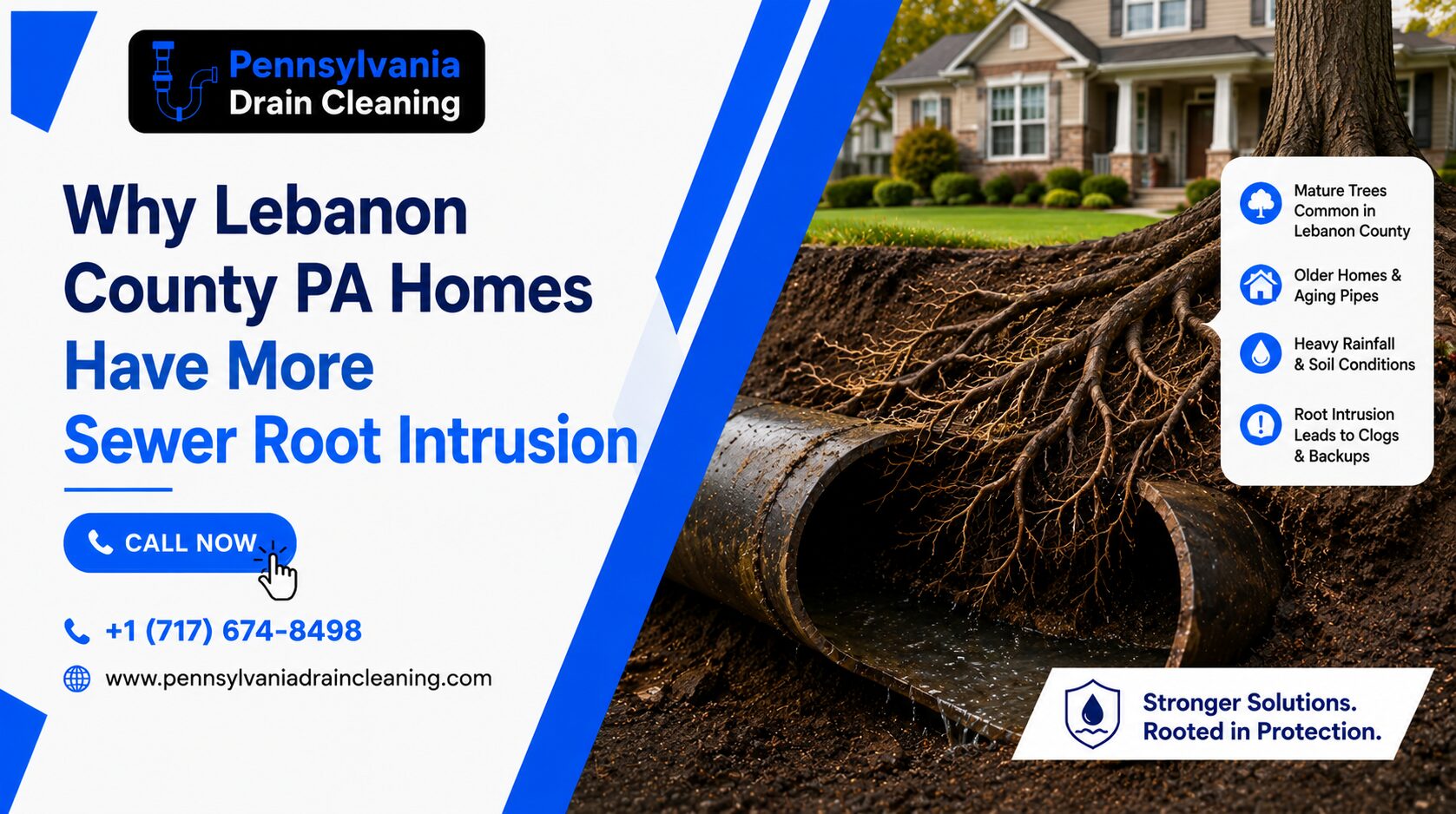
Tree root intrusion is one of the most common causes of sewer line problems for homeowners throughout Lebanon County. Many properties feature mature trees, aging underground infrastructure, and environmental conditions that make sewer systems particularly vulnerable to root-related damage. Understanding the causes of Lebanon County PA sewer root intrusion can help homeowners prevent costly repairs and maintain a reliable plumbing system. Many residents rely on professional drain cleaning services in Pennsylvania to keep sewer lines clear and functioning properly.
Why Tree Roots Target Sewer Lines
Tree roots naturally seek moisture and nutrients. Even the smallest crack, loose pipe joint, or damaged connection can release moisture into the surrounding soil, attracting nearby roots. Once roots locate a water source, they continue growing toward it and can eventually enter the sewer line.
Professional sewage cleanup services are often used to identify root intrusion before significant damage occurs. Early detection allows homeowners to address the problem before roots completely obstruct wastewater flow.
Older Infrastructure Increases Risk
Many areas throughout Lebanon County contain older homes with aging sewer systems. Clay, cast iron, and other older pipe materials are more susceptible to cracks, joint separation, and deterioration than modern piping systems.
Homeowners seeking drain cleaning services in Lebanon PA often discover that root intrusion is one of the leading causes of recurring clogs and sewer backups in older neighborhoods. As pipes age, they become increasingly vulnerable to root penetration.
Soil Conditions in Lebanon County
The soil composition throughout Lebanon County can also contribute to Lebanon County PA sewer root intrusion. Seasonal moisture fluctuations cause soil expansion and contraction, placing stress on underground sewer pipes. Over time, this movement may create small openings that allow roots to enter.
Combined with mature landscaping and extensive tree coverage, these conditions create an environment where root intrusion can develop gradually and remain undetected for years.
The Connection Between Scale Buildup and Root Intrusion
Root intrusion is often not the only issue affecting older sewer lines. Mineral deposits and internal pipe scale can reduce pipe diameter and create rough surfaces that trap debris. Homeowners interested in learning more about these related issues can read our guide on pipe descaling in older Pennsylvania homes.
When scale buildup and root intrusion occur together, sewer performance can decline rapidly, increasing the likelihood of backups and costly repairs.
Warning Signs of Sewer Root Intrusion
Several symptoms may indicate Lebanon County PA sewer root intrusion:
- Frequent drain clogs
- Multiple slow drains throughout the home
- Gurgling sounds from plumbing fixtures
- Sewage odors indoors or outdoors
- Wet patches in the yard
- Recurring sewer backups
These warning signs should not be ignored, as root growth typically worsens over time.
How Professionals Remove Sewer Roots
Modern plumbing companies use several methods to remove roots from sewer lines:
Mechanical Root Cutting
Specialized cutting equipment removes roots that have entered the pipe.
Hydro Jetting
High-pressure water can clear roots, debris, grease, and buildup from the interior of sewer lines.
Sewer Line Repair
Severely damaged pipes may require repair or replacement to prevent roots from re-entering the system.
Routine maintenance helps reduce the likelihood of recurring Lebanon County PA sewer root intrusion problems.
Preventing Future Root Intrusion
Homeowners can reduce the risk of root-related sewer damage by:
- Scheduling regular sewer inspections
- Addressing slow drains promptly
- Repairing damaged sewer lines
- Avoiding planting large trees near sewer routes
- Maintaining older plumbing systems proactively
Preventative maintenance is generally far less expensive than emergency sewer repairs.
Final Thoughts
Lebanon County PA sewer root intrusion is a common issue due to mature trees, aging sewer infrastructure, and local soil conditions. Fortunately, routine inspections, professional drain cleaning, and early intervention can help homeowners avoid severe sewer damage. Understanding the causes of root intrusion allows property owners to protect their plumbing systems and minimize long-term repair costs.
For additional information about protecting underground wastewater systems, review the EPA guidance on tree roots and wastewater infrastructure.
FAQs
Why is Lebanon County PA sewer root intrusion so common?
Mature trees, older sewer systems, and shifting soil conditions create ideal circumstances for roots to enter sewer pipes.
Can tree roots completely block a sewer line?
Yes. If left untreated, roots can grow extensively inside pipes and eventually restrict or block wastewater flow.
How do plumbers detect root intrusion?
Most professionals use sewer camera inspections to locate roots and evaluate the extent of pipe damage.
Can hydro jetting remove sewer roots?
Hydro jetting can remove smaller root masses and debris, although severe root intrusion may require additional repair methods.
How often should sewer lines be inspected for root intrusion?
Homes with mature trees nearby should consider sewer inspections every one to two years to identify developing root problems early.