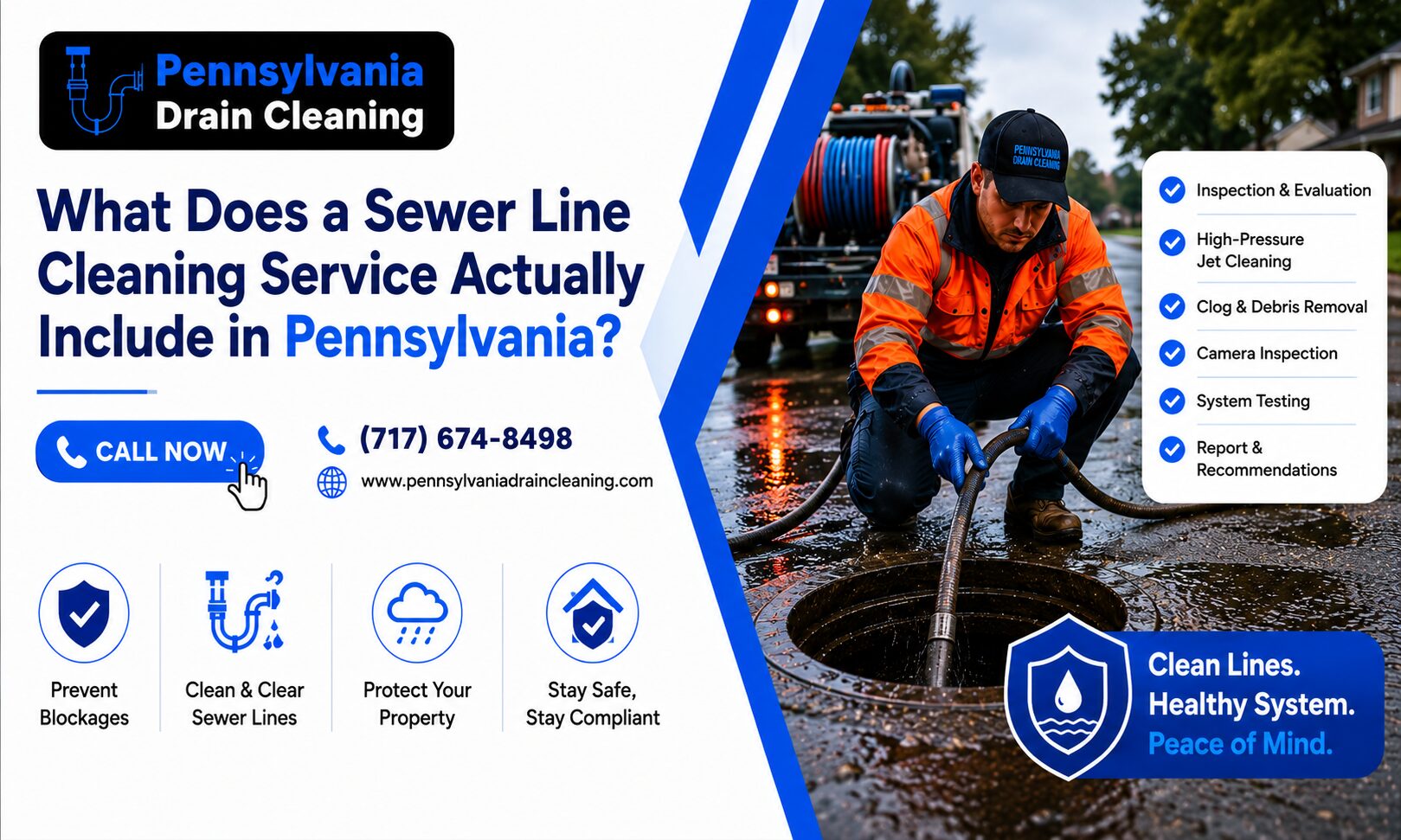
A professional sewer line cleaning service Pennsylvania homeowners rely on typically includes video camera inspection, hydro jetting or snaking, root removal, and post-cleaning testing to restore proper drainage. What happens during the visit depends on the condition of your pipes, the severity of the blockage, and the cleaning method required for your plumbing system. Knowing what to expect before scheduling a sewer line cleaning service in Pennsylvania helps you avoid surprise costs and choose the right contractor for your home.
Why Pennsylvania Homes Have Unique Sewer Line Challenges
Pennsylvania is not a one-size-fits-all state when it comes to sewer systems. In cities like Philadelphia and Pittsburgh, a large portion of residential plumbing still runs through original cast iron, clay tile, and Orangeburg pipe installed before 1950. These materials are brittle, prone to cracking, and wide open to infiltration by tree roots over time. Because of this, homeowners often require a professional sewer line cleaning service Pennsylvania experts can safely perform without damaging aging pipes.
Philadelphia’s roughly 3,100 miles of water mains average 76 years old, and many residential drain lines in neighborhoods like Germantown, Fishtown, and South Philadelphia still depend on original pipes installed before 1950. In areas with dense rowhouse construction, access to cleanouts is often tight, and shared walls can complicate the process further.
Beyond the city, suburban and rural Pennsylvania properties present their own challenges. Mature oak and maple trees lining older neighborhoods push roots aggressively into pipe joints, and homes on private septic systems require a different cleaning approach than those connected to municipal lines. A professional drain cleaning company will assess all of these factors before recommending a method.
Step One: The Initial Assessment and Video Camera Inspection
Almost every legitimate sewer line cleaning service Pennsylvania homeowners hire begins with a thorough assessment of the system before any cleaning equipment is deployed. Reputable technicians will not start jetting or snaking blindly without first understanding what is inside the pipe. Homeowners looking for Philadelphia sewer line cleaning services should always choose a company that performs camera inspections before cleaning.
What a Sewer Camera Inspection Reveals
A sewer video inspection uses a small camera attached to a thin, flexible cable to transmit a real-time view from inside the pipes, helping plumbers locate and diagnose problems including blockages, corrosion, and pipe damage. During a sewer line cleaning service Pennsylvania plumbers often use this inspection to determine whether hydro jetting or snaking is the safer option.
Why Skipping the Inspection Is a Mistake
Many professionals require a camera inspection before hydro jetting to avoid pipe damage and to set the correct water pressure. Older Pennsylvania homes with clay or cast iron pipes cannot always withstand the same pressure levels as newer PVC lines. Running high-pressure water into a compromised pipe without first knowing its condition can cause more damage than the original blockage.
Step Two: Mechanical Snaking for Standard Blockages
Once the inspection is complete, your technician will select the cleaning method that fits the problem. For straightforward blockages caused by grease buildup, hair, soap scum, or small debris, mechanical snaking is typically the first tool deployed during a sewer line cleaning service Pennsylvania residents book for recurring drain problems.
How Snaking Works
Plumber’s snakes use a powerful electric motor to drive a cable into the pipe, and as the cable goes further in, it twists clockwise to clean the entire inside of the pipe, with different blade attachments available for the head to tackle different types of clogs, and cable lengths ranging from 100 to 200 feet.
The rotating head breaks apart the obstruction and pulls debris back out of the line. Snaking is especially practical for blockages located near the cleanout access point and for homes with older, more fragile pipes that cannot tolerate the pressure of hydro jetting.
Snaking a sewer line costs $200 to $500 depending on the depth and location of the clog, and the process typically takes 30 minutes to 2 hours depending on the clog’s location and severity.
It is important to understand that snaking breaks through a blockage but does not scrub the pipe walls clean. Grease film, mineral scale, and biofilm continue to line the interior of the pipe after snaking, which is why recurring clogs are common after this method is used without a more thorough follow-up service.
Step Three: Hydro Jetting for Heavy Buildup and Stubborn Clogs
When the camera reveals heavy grease accumulation, mineral scale coating the pipe walls, dense root intrusion, or a history of recurring blockages, hydro jetting becomes the cleaning method of choice. This is the service that truly restores a sewer line to something close to its original interior diameter.
What Hydro Jetting Actually Does
Hydro jetting uses high-pressure water to scour your pipes clean, removing grease, mineral deposits, debris, and even tree roots for long-lasting results. Many homeowners choose a sewer line cleaning service Pennsylvania company specifically for hydro jetting because it thoroughly cleans the pipe walls instead of only punching through a clog.
Hydro Jetting Costs in Pennsylvania
Hydro jetting ranges from $600 to $1,400 for more severe or stubborn clogs. For most Pennsylvania homes dealing with standard residential lines, the cost falls in the lower half of that range when the blockage is accessible and the pipe is in acceptable condition.
A standard hydro jetting service includes equipment setup, line flushing, and a post-cleaning inspection, while camera diagnostics or additional repairs may be billed separately.
The higher upfront cost compared to snaking is offset by the durability of the result. A properly cleaned sewer line following hydro jetting will remain clear considerably longer than one that was only snaked, reducing the frequency of service calls over time.
Step Four: Tree Root Removal
Tree root intrusion is one of the most common and damaging sewer problems across Pennsylvania, particularly in older neighborhoods where large trees line residential streets and have had decades to grow toward water sources underground. Many calls for sewer line cleaning service Pennsylvania companies receive each year involve severe root intrusion.
Root removal is handled using a combination of tools depending on the severity of the intrusion. For early-stage root entry, the high-pressure nozzle from hydro jetting can cut and flush smaller root masses out of the line. For more established intrusions, a mechanical auger with a specialized root-cutting head is run through the pipe to grind and extract the material.
If a camera inspection confirms tree roots are the culprit, the plumber will use specialized equipment, often combining a heavy-duty auger or hydro jetting with a cutting attachment, and tree root removal adds $200 to $600 or more to the cleaning bill.
It is worth noting that root removal during a cleaning service is not a permanent solution. Roots that have found their way into your line will attempt to regrow. Some Pennsylvania plumbing companies apply a root-inhibiting chemical treatment to the interior of the pipe following removal to slow regrowth. This treatment does not kill trees above ground; it simply discourages new root growth within the treated section of pipe.
Step Five: Post-Cleaning Flow Test and Final Camera Pass
A thorough sewer line cleaning service Pennsylvania homeowners pay for does not end when the jetter or snake is pulled from the cleanout. Reputable technicians will run a post-cleaning flow test by flushing fixtures throughout the home to confirm that drainage is fully restore
Many companies also perform a second camera pass following the cleaning. This post-cleaning inspection serves two purposes. First, it confirms that the blockage was fully cleared and that the pipe walls are clean. Second, and more importantly for Pennsylvania homeowners with aging infrastructure, it reveals any structural issues that were hidden behind the buildup and are now visible with the pipe walls clear. Cracks, offset joints, or sections of corrosion that were not visible during the initial inspection may now be apparent, giving you an accurate picture of your line’s overall condition and whether any repair work should be planned.
What Is Not Always Included
Understanding what a standard sewer line cleaning service Pennsylvania companies provide includes is only half the picture. There are common additions and separate charges that Pennsylvania homeowners should be aware of before booking.
Sewer camera inspections are sometimes bundled into the service cost and sometimes billed separately. Always confirm this before the technician begins work. Locating and marking the depth and position of your sewer line underground using electronic line locating equipment is a service some companies include and others charge additionally for, and it is particularly useful if there is any chance repair work may follow the cleaning. Pipe repair or relining, if structural damage is found during the inspection, is always a separate quote from the cleaning service itself. Root treatments and chemical applications to slow regrowth are optional add-ons, not standard inclusions.
Signs You Need a Sewer Line Cleaning in Pennsylvania Right Now
Signs of a main sewer line issue include multiple slow drains throughout your home, foul odors from drains, gurgling toilets, or sewage backups in lower-level fixtures like floor drains or showers. These warning signs usually indicate the need for a professional sewer line cleaning service Pennsylvania homeowners should schedule quickly before the blockage worsens.
How Often Should Pennsylvania Homeowners Schedule Sewer Line Cleaning?
Annual cleaning is recommended for most Philadelphia homes, especially those with mature trees near sewer lines or pre-1950 homes with original pipe materials, while properties with recurring clogs may benefit from service every six months.
For newer homes without a history of blockages and no large trees in close proximity to the sewer lateral, cleaning every 18 to 24 months is a reasonable preventive schedule. The goal is to remove buildup before it becomes severe enough to cause a backup, rather than waiting for a problem to force your hand.
Choosing the Right Sewer Line Cleaning Company in Pennsylvania
The quality of a sewer line cleaning service Pennsylvania homeowners receive depends enormously on the experience of the technician and the equipment brought to the job. When evaluating Pennsylvania drain cleaning companies, look for licensed plumbers or drain specialists with documented experience in your pipe material type.
Frequently Asked Questions
Does homeowner’s insurance cover sewer line cleaning in Pennsylvania?
Homeowners insurance typically does not cover routine sewer line cleaning or maintenance, though if a sudden clog causes damage to your home, your policy might cover the resulting damage. Adding sewer backup coverage as an endorsement to your existing policy is worth considering if your home has older pipe materials.
How long does a sewer line cleaning take?
Most residential drain cleaning jobs take 30 to 90 minutes depending on severity and location, while main sewer line cleanings with camera inspection typically take one to two hours. Homes with difficult cleanout access or severe root intrusion can take longer.
Can I use chemical drain cleaners instead?
Chemical drain cleaners dissolve soft organic clogs near the drain opening but are ineffective against grease layers deeper in the line, root intrusion, or any physical blockage. They also accelerate corrosion in older metal and clay pipe systems, which is exactly what Pennsylvania’s aging infrastructure does not need.
Is hydro jetting safe for older pipes?
Very old or weak pipes cannot always tolerate the intense pressure of hydro jetting, and if your pipes are not suitable, the plumber may snake the pipes instead or use an auger to break up tree roots. A proper camera inspection before any cleaning method is used will determine which approach is safe for your specific line.
Knowing what a sewer line cleaning service actually includes in Pennsylvania puts you in a far stronger position when speaking with service providers, comparing quotes, and making decisions about your home’s plumbing health. The service is not simply a plumber running a snake down a drain. It is a diagnostic and cleaning process that, when done properly, gives you a clear picture of your pipe’s condition and restores your drainage system to full function.